Know Your Essential Oils: A Beginner's Guide
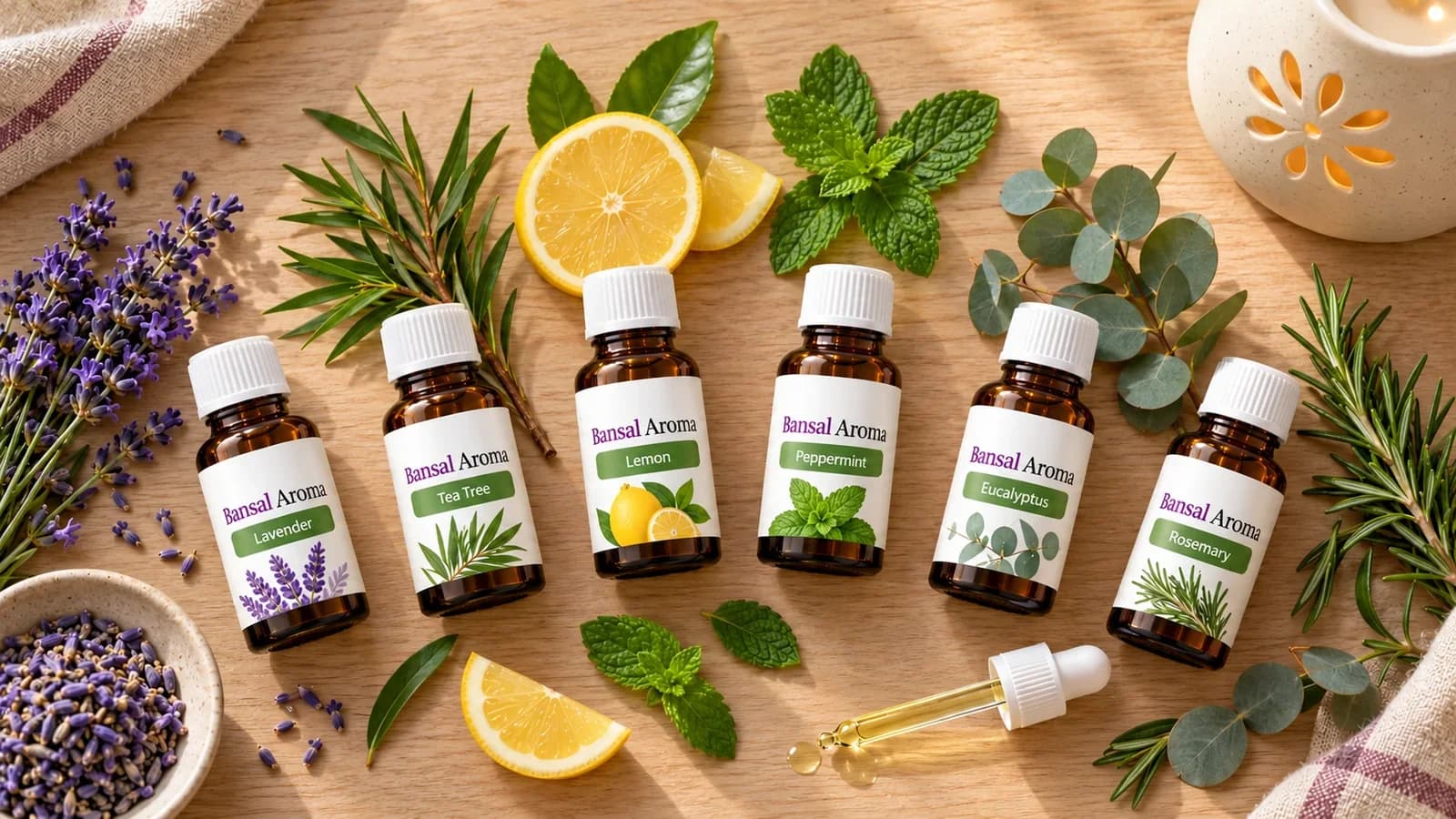
Every essential oil bottle can tell you more than its name and price — if you know what to look for. Here's what the real specifications on a product page actually mean, and why they're worth checking before you buy.
Botanical Name
The botanical name (like Lavandula angustifolia for true lavender) identifies the exact plant species — not just the common name. This matters because several different plants share a common name: "lavender" alone could refer to true lavender, spike lavender, or lavandin, each with a different aroma and different recommended uses. The botanical name is the one detail that removes any ambiguity about what you're actually buying.
Extraction Method
How an oil is obtained changes its character. Steam-distilled oils are the most common; cold-pressed is standard for citrus oils, taken directly from the peel; and a small number of materials use solvent extraction to produce an absolute. None of these methods is inherently "better" — they're simply what each raw material calls for, and the extraction method is part of the oil's real identity, not a marketing detail.
Origin
Where a plant is grown affects its aroma, the same way grapes from different regions produce noticeably different wine. The same species grown in different climates can smell measurably different. Origin is one more real, checkable fact about what's actually in the bottle.
Aroma Profile
This is the closest thing to a written description of what the oil actually smells like — usually a short list of characteristics like "warm, spicy, and woody" or "bright and citrusy." It's a starting point for choosing between oils with similar uses, not a guarantee of an identical scent every time, since aroma can vary slightly batch to batch the way any natural material does.
Choosing a Size
Sizes usually start small — 15g is enough to properly test an oil's aroma and decide if it suits your project — and scale up to 1kg for larger personal or small-batch commercial use. Buying small first is the cheapest way to avoid an unopened, mismatched bottle sitting on a shelf.
The Aroma Library on this site lists these same specifications — botanical name, aroma profile, and extraction method — for every essential oil in the catalog, if you want to compare a few before deciding.