A Beginner's Guide to Diffusing Essential Oils at Home
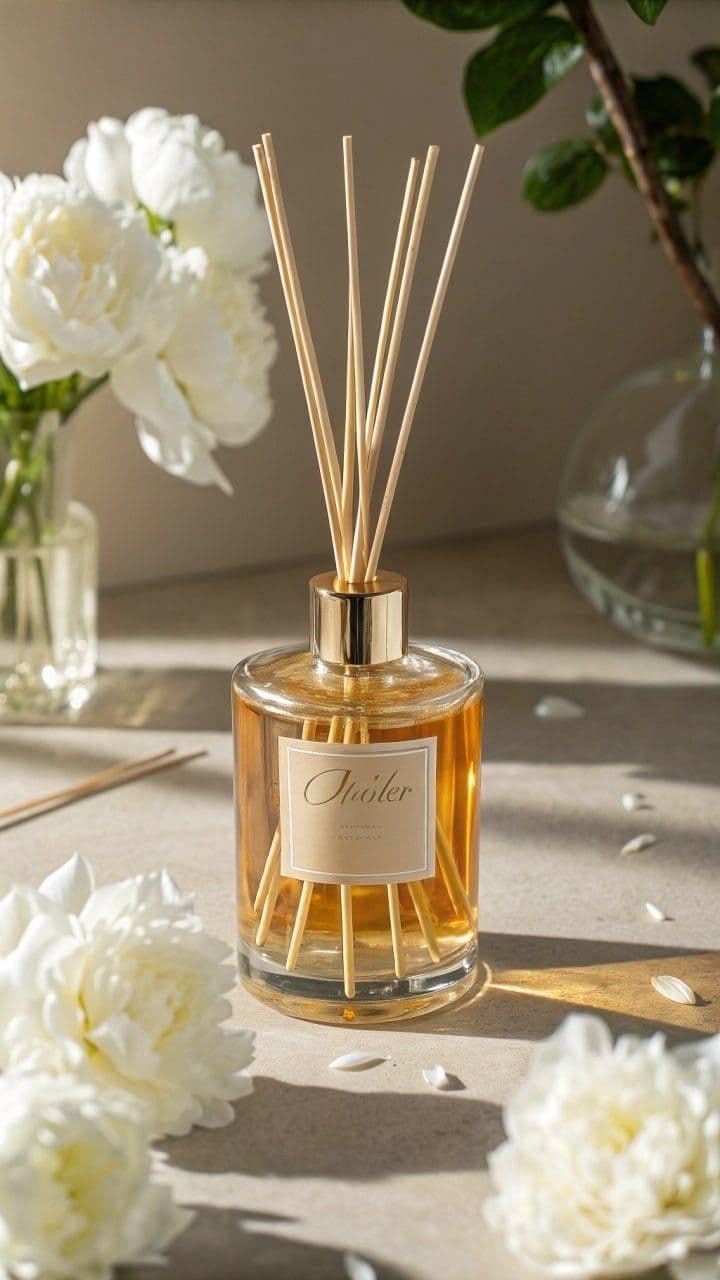
Diffusing is the simplest way most people first try essential oils — no dilution math, no skin contact to think about, just water, a few drops, and a room that smells different twenty minutes later. Here is what is actually happening, and how to get a result you like on the first try.
How an ultrasonic diffuser works
Most home diffusers use a small ultrasonic plate that vibrates at a frequency fast enough to break water (with a few drops of oil floating on top) into a fine cool mist, which carries the oil’s aromatic compounds into the air along with the water vapor. This is different from a candle-warmer or nebulizing diffuser, both of which handle concentration and heat differently.
A sensible starting point
Fill the tank to its marked line with room-temperature water, then add 3 to 5 drops of a single oil or a simple two-oil blend. It is easier to add one more drop after ten minutes if the scent feels too light than to fix an overpowering room, so start conservative, especially in a small bedroom or office.
Choosing an oil for the mood you want
- Lavender Oil — the most common choice for a calm, unwinding evening atmosphere.
- Rose Oil — a rich, elegant floral for a living or dressing room.
- Tea Tree Oil — a clean, crisp, almost medicinal note some people prefer over sweeter florals.
- Ylang Ylang Oil — a deep, exotic floral that reads warmer than lavender or rose.
Running time and room size
A standard 100–300ml diffuser is built for a bedroom or small living room, not an open-plan floor — in a larger space you will smell less, not more, no matter how many drops you add, because the mist simply disperses across too much air. Most diffusers are also not meant to run continuously for hours; intermittent misting cycles (built into most units) use less oil and avoid oversaturating a small room.
A quick safety note
Diffused essential oils are inhaled, not applied to skin, so dilution guidance for topical use does not directly apply — but pets and very young children can be more sensitive to strong ambient scent than adults, so it is worth diffusing in a well-ventilated room and watching how anyone sensitive in the house reacts the first few times.
Frequently Asked Questions
How many drops of essential oil should I use in a diffuser?
Start with 3 to 5 drops for a standard 100–300ml ultrasonic diffuser and a small to medium room, then adjust up gradually if you want a stronger scent.
Can I mix different essential oils in a diffuser?
Yes. Simple two-oil blends (for example lavender with a floral note) are a common starting point once you know how each oil smells on its own.
Is it safe to run a diffuser all night?
Many diffusers have an intermittent misting mode built for longer sessions, but continuous, high-concentration diffusing in a small closed room isn’t necessary for most people to notice the scent, and moderate use is generally the more comfortable choice.